Rising inflation and increasing living costs have made daily life more challenging for many families in Pakistan. From grocery bills to electricity charges, essential expenses continue to grow while incomes remain limited for low-income households. To provide relief during these difficult times, the government has introduced several social welfare initiatives. One of the latest efforts is the Nighaban Card distribution program, which aims to provide financial assistance to vulnerable families.
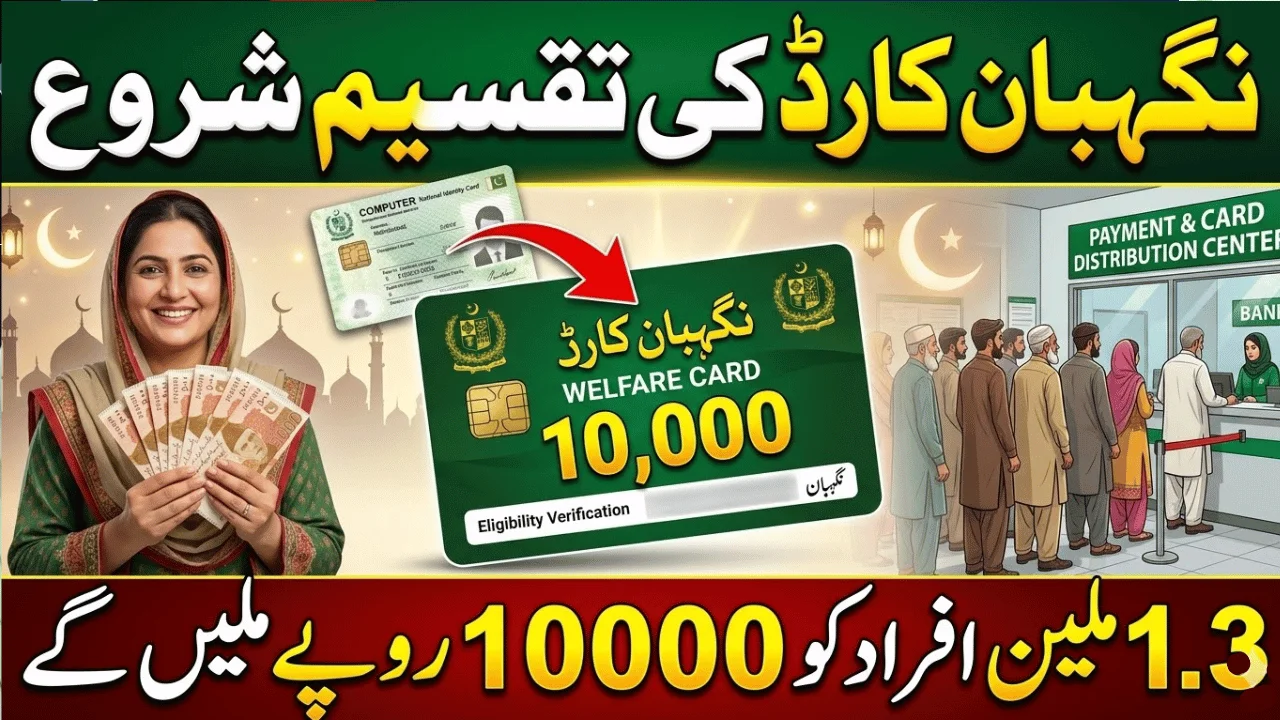
The launch of the Nighaban Card distribution marks an important step in strengthening the country’s social protection system. According to initial reports, around 1.3 million beneficiaries are expected to receive financial assistance through this program, with payments of approximately Rs.10,000 provided to eligible households.
This initiative is designed to support families struggling with everyday expenses and help them maintain basic financial stability.
What Is the Nighaban Card Program?
The Nighaban Card program is a welfare initiative introduced to support low-income households by providing regular financial assistance. Instead of one-time relief packages, the program focuses on delivering consistent payments that help families manage recurring expenses.
The card works as an official payment mechanism through which beneficiaries can access their financial assistance through authorized channels.
Key Objectives of the Program
-
Provide financial relief to vulnerable households
-
Help families manage essential expenses
-
Strengthen the national social safety system
-
Ensure transparent distribution of welfare funds
The government hopes that regular financial assistance will reduce economic stress for families facing financial hardship.
Start of the Nighaban Card Distribution
The distribution of Nighaban Cards has officially started, allowing eligible individuals to begin receiving their payments. Authorities have initiated the rollout in several regions, and the program is expected to expand gradually.
The issuance of these cards means that beneficiaries will soon be able to access their payments using the official system established for the program.
Important Highlights of the Distribution Process
-
The card distribution phase has officially begun.
-
Registered beneficiaries are receiving their payment cards.
-
Financial assistance will be provided on a scheduled basis.
-
The program aims to reach a large number of households nationwide.
For many families, receiving the card is the first step toward accessing much-needed financial assistance.
Financial Assistance Provided Through the Nighaban Card
One of the main features of the program is the quarterly financial support provided to eligible beneficiaries. The payment amount is designed to help families cover essential household expenses.
Typical Expenses Covered by the Assistance
Families often use this financial support for:
-
Purchasing groceries and basic food items
-
Paying electricity or gas bills
-
Buying school supplies for children
-
Covering minor healthcare expenses

While the payment may not fully cover all expenses, it provides meaningful support for households with limited income.
Key Details of the Nighaban Card Program
| Program Feature | Details |
|---|---|
| Program Name | Nighaban Card Program |
| Payment Amount | Around Rs.10,000 |
| Payment Frequency | Quarterly |
| Estimated Beneficiaries | Approximately 1.3 million people |
| Distribution Method | Nighaban Card issuance |
| Main Objective | Financial assistance for vulnerable families |
The scale of this program highlights the government’s efforts to expand financial support systems for low-income citizens.
Estimated Beneficiaries of the Program
Initial estimates suggest that the program may support around 1.3 million people across Pakistan. If implemented successfully, it will become one of the larger financial assistance initiatives aimed at helping vulnerable households.
Groups Likely to Benefit
-
Low-income families
-
Daily wage workers
-
Widows and elderly individuals
-
Families facing economic hardship
Expanding assistance to a wide group of beneficiaries ensures that support reaches communities that need it the most.
Payment Distribution and Monitoring System
Transparency and accountability are critical for any public welfare initiative. Authorities are expected to implement monitoring mechanisms to ensure that funds reach the correct beneficiaries.
Key Monitoring Measures
-
Verification of beneficiary records
-
Issuance of official Nighaban Cards

-
Tracking of payment disbursement
-
Prevention of fraud and misuse
Such monitoring helps maintain trust in the program and ensures fair distribution of funds.
How the Program Helps Communities
Beyond helping individual households, programs like the Nighaban Card initiative can also benefit local economies.
Community-Level Impact
When families receive financial assistance, they often spend it on essential goods in nearby markets. This creates a positive cycle where:
-
Local businesses receive more customers
-
Small shop owners increase their sales
-
Communities experience improved economic activity
In this way, social welfare programs can indirectly support both families and local businesses.
Pros and Cons of the Nighaban Card Program
Advantages
-
Provides direct financial support to vulnerable households
-
Regular payments allow families to plan their expenses

-
Strengthens the national social protection system
-
Encourages financial stability in struggling communities
Limitations
-
The payment amount may not cover all household expenses
-
Some eligible families may still be unaware of the program
-
Distribution delays can occur in remote areas
Despite these challenges, the program offers meaningful assistance to many families.
Frequently Asked Questions (FAQs)
What is the Nighaban Card program?
The Nighaban Card program is a government welfare initiative that provides financial assistance to low-income families.
How much financial assistance is provided?
Eligible beneficiaries may receive around Rs.10,000 every three months.
Who can benefit from the program?
Low-income households, daily wage workers, widows, and other vulnerable groups are expected to benefit.
How are payments distributed?
Payments are distributed through the Nighaban Card system using authorized payment channels.
How many people will receive assistance?
Early estimates suggest that about 1.3 million beneficiaries may receive support under the program.
Conclusion
The Nighaban Card distribution program represents an important step toward supporting vulnerable families facing financial difficulties. By providing regular financial assistance of around Rs.10,000, the initiative helps households manage essential expenses and maintain some level of financial stability.
With an estimated 1.3 million beneficiaries, the program has the potential to provide meaningful relief to many communities across the country. If implemented efficiently, it could strengthen Pakistan’s social protection system and improve the quality of life for families struggling with rising living costs.